Why the Strait of Hormuz Matters
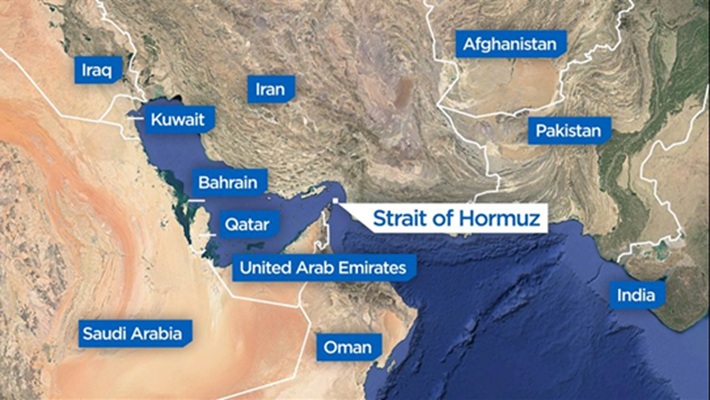
The Strait of Hormuz is one of the most strategically important waterways in the world. Despite being only about 21 miles wide at its narrowest point, it handles a massive share of global oil trade.
Significance
According to the BBC, about 20% of the world's oil and liquefied natural gas (LNG) passes through the Strait of Hormuz. This energy trade is immensely important; in 2020, gasoline and diesel vehicles accounted for 98% of the global vehicle stock (ESSD). Because transportation remains heavily dependent on petroleum fuels, disruptions to oil supplies can rapidly affect transportation costs and therefore consumers. Furthermore, because such a large share of global energy trade passes through Hormuz, trillions of dollars in economic activity depend on the strait every year, rendering it a critical economic chokepoint and making it vulnerable to manipulation.
A study by the Federal Reserve Bank of Dallas found that a three-month closure of the Strait would reduce the level of global GDP by approximately 0.2% by year's end. This is equivalent to roughly $240 billion in lost global economic output at today's GDP levels, and would be devastating for countries around the world. This includes both more dependent countries like Saudi Arabia and more resilient countries like the United States. While reserves are in place in the event of such a closure, the average American household is likely to face significant additional costs as gas prices increase. According to FactCheck.org, only a few weeks after initial US strikes against Iran began, “Oil prices… increased by double-digit percentages, which has contributed to a 50-cent-plus spike in the average price of a gallon of gasoline in the U.S.” For an average American household, even modest increases in fuel prices can translate into hundreds or thousands of dollars in additional annual expenses, depending on driving habits and the duration of the disruption.
Furthermore, the United States is certainly not the only Western country affected; Europe is far more reliant on imports for its natural gas (U.S. Energy Information Administration), and so a long-term disruption of the Strait would be catastrophic. According to the European Central Bank, the escalation of conflict with Iran has “resulted in an average supply loss of around 14 mb/d so far, representing 14% of global oil supply.” The world as a whole is feeling the effects of short-term, sporadic closures, and if Iran continues to restrict shipping within the Strait for the next several months, continued economic ramifications are likely to follow.
Geopolitical Importance
The Strait of Hormuz sits between Iran and the Arabian Peninsula, meaning multiple regional powers have strategic interest in influencing or, if possible, controlling access to it. Several countries bordering the Strait, including Iran and Saudi Arabia, maintain some of the region's strongest militaries. Iran and Saudi Arabia rank 16th and 25th respectively in military strength (GlobalFirepower.com) in 2026, with many of their geographic neighbors holding similarly high rankings. Many of these countries, particularly Saudi Arabia, the United Arab Emirates, and Iran, hold very distinct, often conflicting ideologies. This friction between their political goals, geographical position near the Strait, and their strong militaries has caused years of conflict and outright war surrounding Hormuz.
However, the Strait’s geopolitical influence extends far beyond its immediate region. As detailed above, Hormuz sees trillions of dollars flow in and out of the waterway every year. This economic activity is both attractive and strategically concerning to the major powers of the world; maintaining influence over the Strait is a logical way to expand a country’s overseas trade and bolster its economy from the rich financial potential of fossil fuels. Still, this opportunity is attractive to every other country in the world also, leading to extensive conflict and economic struggles between countries as they compete to dominate the Strait. An example of this can be seen in the 1980s “Tanker War,” which saw immense conflict between Iraq and Iran as both countries attacked oil transport ships and mined the waterways of Hormuz in an attempt to harm each other’s economies. Conflict escalated and threatened international shipping, which resulted in the United States stepping in by escorting Kuwaiti tankers and later directly engaging with the Iranian military.
It is unlikely that conflict over the Strait of Hormuz will end in the near future. According to a report by Shell, “Global demand for liquefied natural gas (LNG) is forecast to rise by around 60% by 2040, largely driven by economic growth in Asia, emissions reductions in heavy industry and transport as well as the impact of artificial intelligence.” As demand for LNG increases, the Strait will look ever more lucrative as an increasingly valuable asset for countries seeking economic growth and regional influence. Unless significant political upheaval occurs in the Middle East that results in generally friendly regimes surrounding the Strait, this lucrative choke point is likely to continue to be the target of closures, claims, and manipulation well into the 21st century.
Current Events
Since April of 2026, the Strait of Hormuz has drawn significant international focus. This can be attributed to decades of feuding between the United States, Israel, Iran, and the broader Middle East over many issues, such as the Strait itself (as well as other issues like nuclear weapons). However, a dispute of this scale between the United States and Iran has not seen its equal in decades. The origin of these conflicts can roughly be attributed to the 1953 CIA and British-sponsored overthrow of Iran’s democratically elected Prime Minister, Mohammad Mosadegh, according to the Roosevelt Institute for American Studies. Coined as Operation Ajax, the overthrow “...amplified anti-American sentiment in Iran and bolstered nationalism, helping shape the environment in which the Iranian Revolution of 1979 was able to take hold.” Since the revolution, Iranian-American relations have only worsened, culminating in the infamous 1979 Hostage Crisis as well as current conditions in the Middle East today.
The Strait's influence on modern regional policy is best demonstrated through the countries Saudi Arabia, Qatar, and the United Arab Emirates (UAE). All three countries have condemned any use of the Strait as a political or diplomatic bargaining weapon according to Aljazeera and Middle East Eye. As mentioned earlier, almost all of the liquified natural gas (LNG) that passes through originates in Qatar–about 93%, according to the U.S. Energy Information Administration. This number alone accounts for 20% to 35% of Qatar’s nominal GDP, making the country extremely reliant on LNG to prop up its economy. Furthermore, crude oil exports account for 20% to 45% of Saudi Arabia’s GDP, a significant portion of which is exported through Hormuz. Similarly, oil accounts for roughly 30% of the UAE’s GDP, though its growing tourism industry and utilization of the Habshan-Fujairah oil pipeline to bypass the strait and export directly into the Gulf of Oman has somewhat supplemented its reliance on the Strait (Strauss Center). Ultimately, Saudi, Qatari, and Emirati policy regarding Hormuz is enormously bolstered and protective due to their reliance on exporting through it.
While solar, nuclear, hydroelectric, and wind power technologies are ever on the rise, it is unlikely to displace liquid fossil fuels as primary industrial inputs in the near term. Due to this global overreliance, and the effects of growing globalization, more countries are likely to invest in the Strait, thus incentivizing more political strategy around it, causing more military interest and conflict in turn. This trend is very likely to continue through the end of the twenty-first century, and as such the Strait of Hormuz will be a key geographical location for policy makers well into the future.
Analysis and Conclusion
The Strait of Hormuz is a textbook example of a geographic chokepoint shaping global politics and economics. Understanding it helps explain why certain regions have outsized importance in world affairs.